Event inflatables bring colour, movement and energy to outdoor gatherings, from product launches and sports days to festivals and corporate promotions. Their eye-catching presence can draw people in, yet they also introduce clear safety responsibilities that organisers must take seriously.
When planning to use event inflatables such as air dancers, arches or larger promotional pieces, a practical safety checklist focused on anchoring, weather and crowd management helps reduce risk and keep everyone safe. This guide sets out the key points organisers and operators need to consider before and during use.
Proper Anchoring for Stability
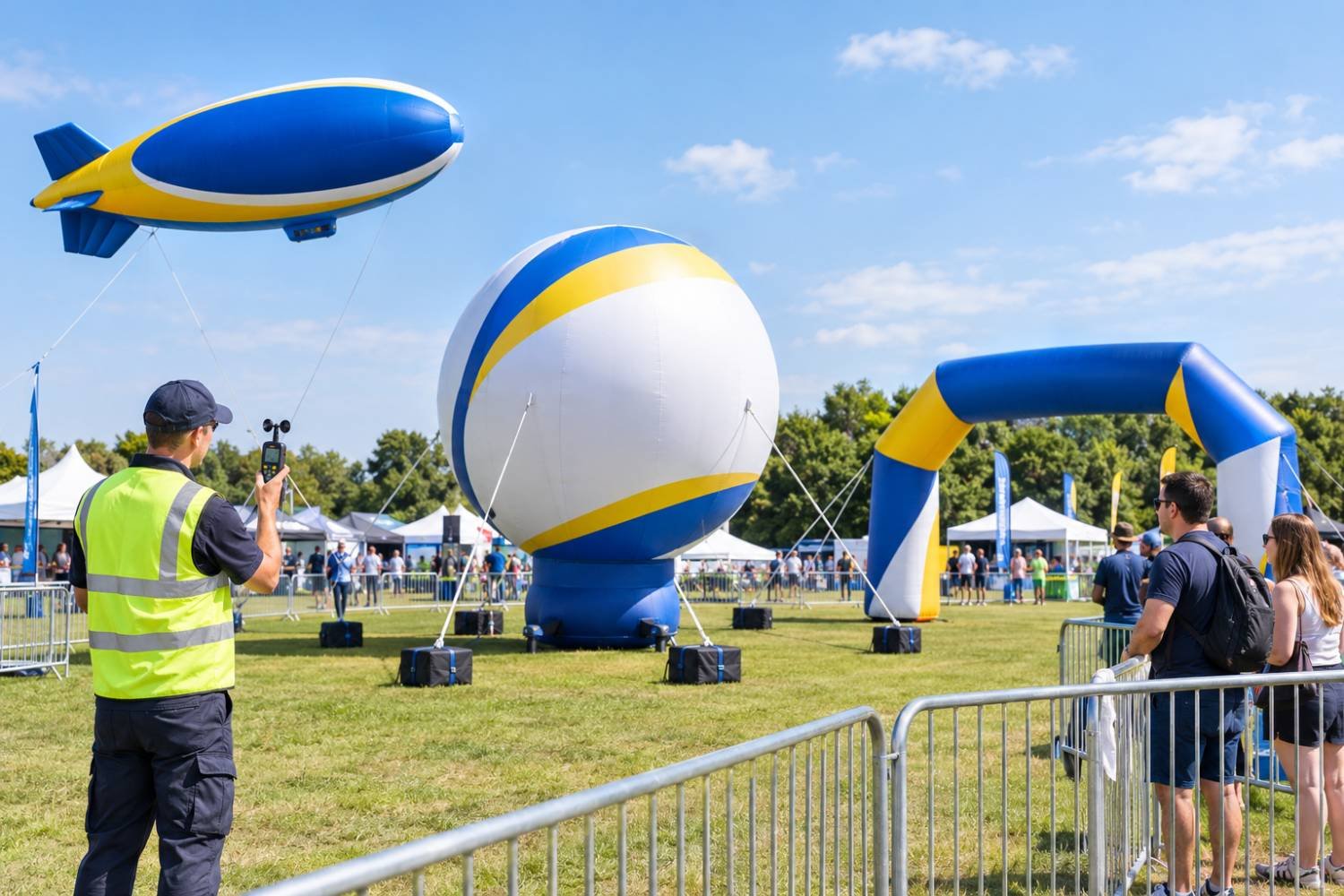
Secure anchoring is essential for safe outdoor operation. Use all manufacturer-fitted anchor points, with at least six on most inflatables, regardless of weather conditions.
On grass or soft ground, use suitable metal stakes at least 380 mm long and 16 mm in diameter. Keep ropes and guy lines in good condition, and never substitute bungee cords or improvised materials.
On concrete or tarmac, use ballast weighing at least 163 kg at each anchor point, securely attached to prevent the inflatable from lifting. Suitable ground anchor bolts may also be used when properly installed.
Regularly inspect anchor points, ropes, and fittings throughout the event. Use barriers or protective matting around anchor points and blowers to reduce trip hazards and protect nearby people.
Monitoring Weather Conditions
Weather is one of the most significant variables affecting inflatable safety. No inflatable should operate in winds above 24 mph (38 km/h), equivalent to Force 5 on the Beaufort scale, when small trees in leaf begin to sway. Some products carry a lower maximum wind speed in their operator manual, so always check the specific limit for the item in use.
An anemometer must be used to measure wind speed at regular intervals on site. Smartphone weather apps or general forecasts are not sufficient because they do not capture local conditions. Readings should be recorded, and checks increased if the weather deteriorates. If gusts approach or exceed the safe limit, the inflatable must be evacuated and deflated promptly.
Light rain is often manageable with durable outdoor materials, but heavy rain increases the risk of slips and can affect fabric performance. Extreme conditions of any kind call for the structure to be taken down. Constant airflow from the fan is what keeps most continuous-inflation inflatables upright, so power supply reliability also forms part of weather readiness.
Managing Crowds Safely
Crowd control around event inflatables prevents overcrowding, misuse and accidents. Barriers can create a clear exclusion zone around blowers, guy ropes and the base of the structure. This keeps people at a safe distance while still allowing the visual impact to do its job.
Supervision is non-negotiable. At least one suitably trained person should remain present whenever the inflatable is in use. Their role includes enforcing any manufacturer limits on the number of users, separating different size groups where relevant, and ensuring no one climbs walls or hangs from parts not designed for that purpose. For non-play promotional pieces such as air dancers, the focus shifts more to keeping the public clear of moving parts and power cables.
Access and exit points need clear space and, where people might fall, impact-absorbing matting that meets recognised standards. Pockets should be emptied of sharp items, and anyone who appears intoxicated should not approach the equipment. A simple site plan that shows placement away from overhead power lines, steep slopes and other hazards helps everyone understand the layout.
Practical Pre-Event Checks
Before inflation begins, a short sequence of checks reduces the chance of problems later:
- Confirm the site is level, clear of debris and free from overhead hazards.
- Inspect the fabric, seams and blower for damage or blockage.
- Verify every anchor point and rope is present and serviceable.
- Test the power supply and ensure the blower’s non-return flap works.
- Position barriers and matting as needed.
- Brief attendants on wind monitoring, evacuation and emergency procedures.
These steps take little time yet form the core of a reliable safety routine. When professional operators are used, they should supply their own risk assessment, method statement and evidence of inspection.
When Professional Advice Is Useful
Complex sites, hard standing, large structures or high expected attendance all benefit from early discussion with experienced suppliers or safety advisers. They can confirm whether ballast arrangements are adequate, advise on anemometer placement and help shape a site-specific risk assessment. Following the operator manual and recognised UK guidance remains the baseline expectation for anyone responsible for the equipment.
Q.1 Why must every anchor point be used even in calm weather?
Ans: Wind conditions can change quickly. Using all points from the start keeps the structure stable and prevents the base lifting if gusts arrive later.
Q.2 Is a weather app enough to decide whether conditions are safe?
Ans: No. Local wind speed must be measured with an anemometer on site because general forecasts and phone apps do not capture conditions at the exact location.
Q.3 What weight of ballast is needed on hard surfaces?
Ans: Each anchor point requires ballast of at least 163 kg, securely fixed so the inflatable cannot lift or shift.
Q.4 How often should wind speed be checked during an event?
Ans: Regular intervals are required, with more frequent checks if the weather is changeable. Readings should be recorded.
Q.5 Who should supervise an inflatable event?
Ans: At least one suitably trained person must remain present while the equipment is in use, with additional attendants if the risk assessment shows they are needed for crowd control.
Closing Remarks
Safe use of event inflatables rests on three practical pillars: complete and correct anchoring, continuous weather monitoring with an anemometer, and clear crowd management backed by trained supervision. Following manufacturer instructions and recognised UK guidance on stakes, ballast and wind limits removes the most common causes of incidents.
Organisers who build these checks into their planning, brief their team, and act promptly when conditions change will keep both the public and the equipment secure. A short pre-event inspection and a willingness to take the structure down when needed remain the simplest and most effective steps anyone can take.