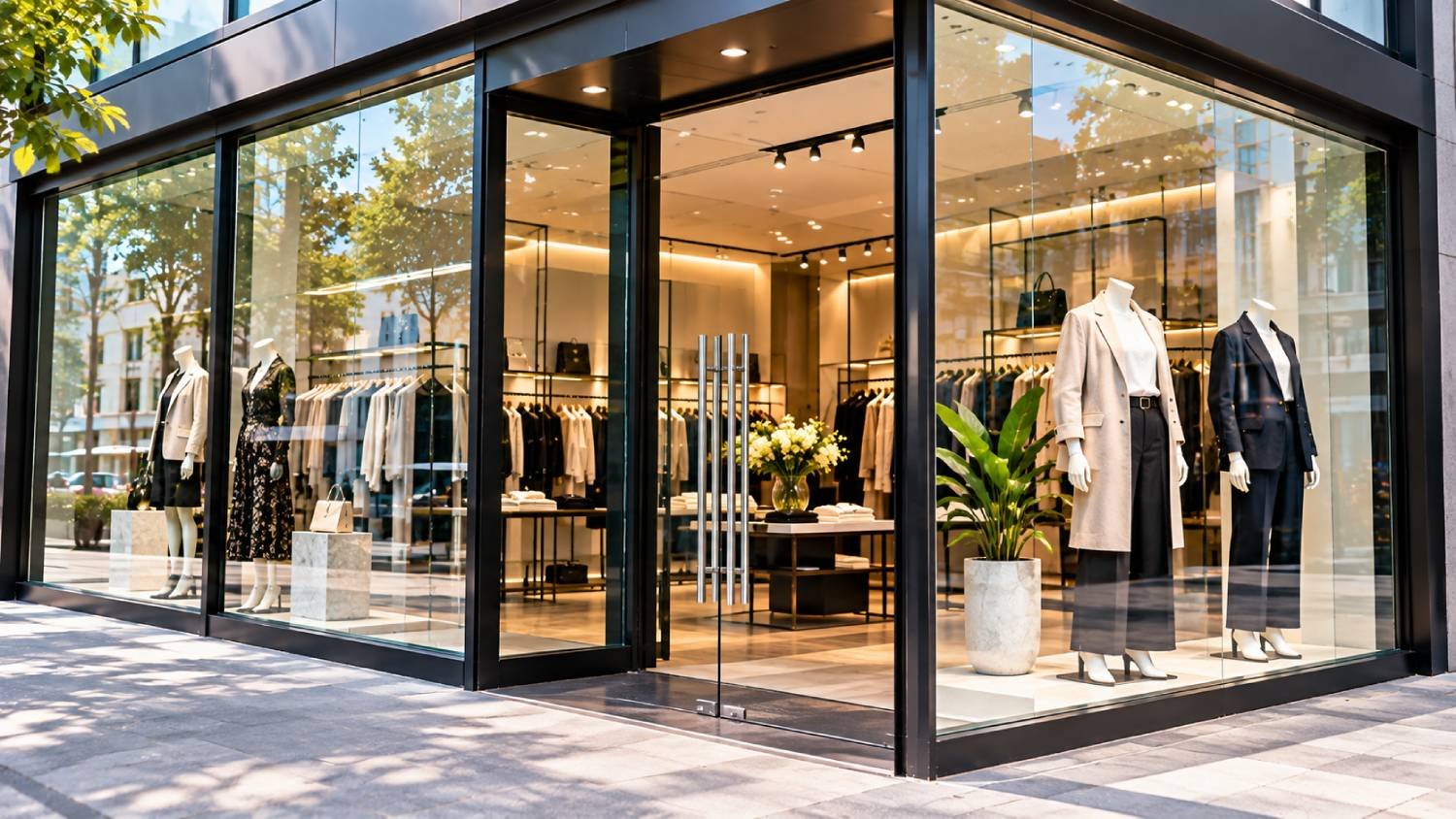
Shop fronts need glass that balances clear display with practical protection. The two most common safety options are toughened and laminated glass, each behaving differently under impact and offering distinct benefits.
Selecting the right material for shop front glazing depends on the level of security required, the location of the premises and the overall design goals. Understanding how each type performs helps property owners and managers make a clearer decision.
How Toughened Glass Works
Toughened glass is produced by heating ordinary glass to a high temperature and then cooling it rapidly. This process puts the surface under compression and makes the pane significantly stronger than standard annealed glass of the same thickness.
When it breaks, toughened glass shatters into small, relatively blunt cubes rather than long sharp shards. This reduces the risk of serious injury, which is why it meets safety requirements in many critical locations.
Because the fragments fall away, an opening is left in the frame once the glass fails. This characteristic limits its value as a security barrier. Toughened glass is widely used where impact strength and safety are the main priorities and the risk of deliberate attack is lower.
How Laminated Glass Works
Laminated glass consists of two or more sheets of glass bonded together with a clear plastic interlayer, usually polyvinyl butyral (PVB). The layers are pressed under heat and pressure so they form a single unit.
On impact the glass cracks, often in a spider-web pattern, but the interlayer holds the pieces in place. The pane remains in the frame and continues to act as a physical barrier. This retention is the main reason laminated glass is preferred for security applications.
The interlayer also provides additional benefits. It blocks a high proportion of ultraviolet light, which helps protect displays and interiors from fading, and it improves sound reduction compared with a single pane of the same thickness.
Key Differences for Shop Fronts
The practical differences centre on what happens after breakage and the secondary performance each type offers.
Toughened glass prioritises strength and safe breakage. It is generally lighter and more economical. Once broken, however, it leaves a clear opening that can be entered quickly.
Laminated glass prioritises retention and resistance to penetration. Even after cracking it continues to obstruct access, which can deter opportunistic smash-and-grab attempts. It also adds UV filtering and acoustic improvement that many retailers find useful.
In higher-risk locations the two processes are often combined. Toughened laminated glass offers the impact resistance of toughening plus the holding power of the interlayer.
Factors to Weigh When Choosing
Several practical points help decide between the options:
- Security risk level – street-facing or high-value retail units usually benefit from laminated or toughened-laminated glass.
- Location of the glazing – ground-floor panels and areas near locks often need stronger retention after impact.
- Design and visibility – both types can be produced in clear or tinted finishes; laminated glass may appear slightly thicker.
- Secondary benefits – noise reduction and UV protection favour laminated glass.
- Frame compatibility and weight – laminated units are heavier, so existing frames may need checking.
- Regulatory requirements – both meet safety glass standards in critical locations, yet specific security guidance may favour laminated glass in certain commercial settings.
Matching the glass type to the actual risks of the site produces a more reliable result than choosing solely on cost or appearance.
Style and Practical Considerations
Modern shop fronts often aim for large, clear panels that showcase products without heavy framing. Both toughened and laminated glass support this approach. Clear laminated glass maintains good optical quality while adding the security layer.
Where solar control or privacy is needed, coatings or tints can be applied to either type. The choice of glass should sit alongside decisions about framing material, door hardware and any secondary security measures such as shutters or alarms.
Professional measurement and specification remain important. Incorrect thickness, edge quality or installation can reduce the performance of even the best glass.
When Specialist Advice Helps
Complex façades, heritage buildings or premises with high security requirements benefit from early discussion with a glazing specialist. They can confirm compliance with current building regulations, advise on suitable thicknesses and ratings, and check that the existing frames can support the chosen units.
For multi-unit portfolios it is useful to standardise specifications where possible so replacement stock and maintenance procedures stay consistent.
Closing Remarks
Toughened glass delivers high impact strength and safe breakage patterns, making it a practical choice where security risk is moderate. Laminated glass holds together after impact, offering better resistance to forced entry along with UV and acoustic benefits.
The most suitable shop front glazing depends on the specific risks and priorities of each premises. Assessing location, value of goods on display and secondary performance needs leads to a clearer, more effective specification.